


SKI BOOT SIzE & FIT GUIDE
Size. Fit. Flex. Everything you need to choose the right ski boots. The right ski boots can make a bigger difference in your day on the mountain than almost any other piece of equipment. Proper sizing, a secure fit, and the right flex all affect comfort, control, and performance. This guide explains ski boot sizing, how ski boots should fit, what flex ratings mean, and what to consider when choosing the right pair for your feet, ability level, and skiing style.
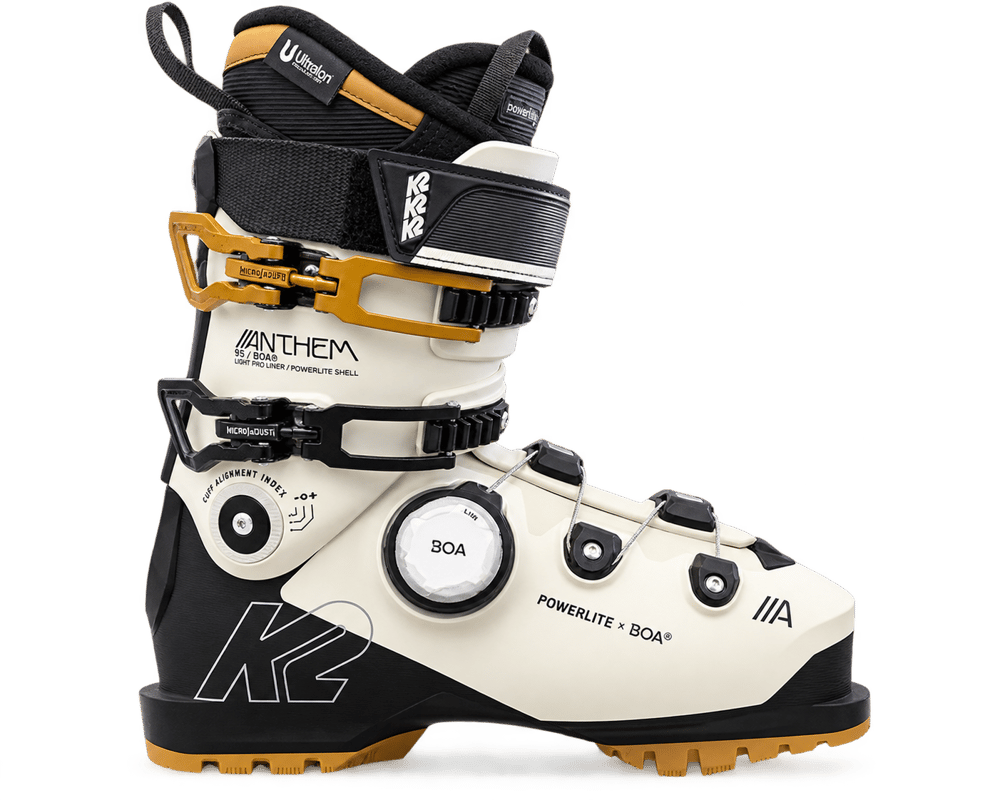
How Should Ski Boots Fit?
Ski boots should fit much more snugly than everyday shoes. When you first put them on, your toes may lightly touch the front of the boot while standing upright. As you flex forward into a skiing position, your heel should settle back into the boot and your toes should pull slightly away from the front.
Your foot should feel securely held without excessive movement, especially around the heel and ankle. Snug is normal. Sharp pain, numbness, or intense pressure is not.
One of the most common ski boot fitting mistakes is buying boots that are too large because they feel more comfortable in the store. Liners compress and create additional room with use, which can leave an oversized boot feeling loose and difficult to control.
If you are local to Colorado Springs and want to schedule a boot fitting you can call us at 719-357-8820.
How to Find Your Boot Size
Ski Boot Size Chart
Ski boots use Mondopoint sizing, or “Mondo,” which is based on the length of your foot in centimeters. Use this chart as a starting point to compare Mondo sizing with common U.S. shoe sizes.
| Mondo (cm) |
US Men's | US Women's | US Kids / Youth |
|---|---|---|---|
| 15.0 | — | — | 8 Kids |
| 15.5 | — | — | 8 Kids |
| 16.0 | — | — | 9 Kids |
| 16.5 | — | — | 9 Kids |
| 17.0 | — | — | 10 Kids |
| 17.5 | — | — | 11 Kids |
| 18.5 | — | — | 12 Kids |
| 19.5 | — | — | 13 Kids |
| 20.0 | — | — | 13.5 Kids |
| 20.5 | 1 | — | 1 Youth |
| 21.0 | 2 | — | 2 Youth |
| 21.5 | 3 | 4.5 | 3 Youth |
| 22.0 | 4 | 5 | 4 Youth |
| 22.5 | 4.5 | 5.5 | — |
| 23.0 | 5 | 6 | — |
| 23.5 | 5.5 | 6.5 | — |
| 24.0 | 6 | 7 | — |
| 24.5 | 6.5 | 7.5 | — |
| 25.0 | 7 | 8 | — |
| 25.5 | 7.5 | 8.5 | — |
| 26.0 | 8 | 9 | — |
| 26.5 | 8.5 | 9.5 | — |
| 27.0 | 9 | 10 | — |
| 27.5 | 9.5 | 10.5 | — |
| 28.0 | 10 | 11 | — |
| 28.5 | 10.5 | 11.5 | — |
| 29.0 | 11 | 12 | — |
| 29.5 | 11.5 | 12.5 | — |
| 30.0 | 12 | 13 | — |
| 30.5 | 12.5 | 13.5 | — |
| 31.0 | 13 | 14 | — |
| 31.5 | 13.5 | 14.5 | — |
| 32.0 | 14 | 15 | — |
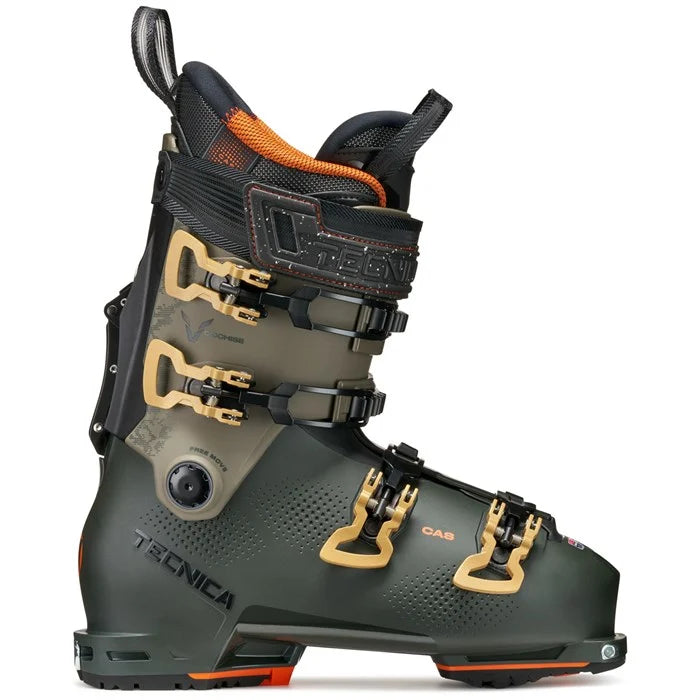
What Does Boot Flex Mean?
Boot flex describes how easily or firmly a boot flexes as you move into an active skiing or riding position. Softer boots generally require less force to flex and tend to feel more forgiving, while stiffer boots provide greater resistance and can feel more supportive and responsive.
There is no single flex that is right for everyone. Your ability level matters, but so do your weight, strength, riding style, terrain, speed, and personal preference.
Flex ratings also aren't perfectly standardized between manufacturers, so a particular rating from one brand may not feel exactly the same as the same rating from another.
SIGNS OF A GOOD FIT
- ✓ Snug
- ✓ Secure
- ✓ Heel Held
- ✓ No Painful Pressure
COMMON FITTING MISTAKES
- ✕ Buying too big
- ✕ Using shoe size only
- ✕ Ignoring heel movement
- ✕ Choosing flex by ability alone
How to Choose Your Flex
There isn't one perfect ski boot flex for every skier. Your ability level is a useful starting point, but your body weight, skiing style, strength, and personal preference all affect how a boot will feel and perform.
Consider these factors when narrowing down your flex
WHAT DO THE NUMBERS MEAN?
Ski boot flex ratings generally increase with stiffness: a 70-flex boot will typically be softer and easier to flex than a 100-flex boot, while a 120-flex boot will generally provide more resistance and support.
However, ski boot flex ratings are not standardized across the industry. A 100 flex from one manufacturer may not feel exactly like a 100 flex from another, and factors such as boot construction, temperature, and fit can also affect how stiff a boot feels.
Use the number as a helpful comparison and starting point rather than an exact measurement of stiffness.
Ready to start your ski boot search?
Shop Ski Boots Today

FAQ section
Should ski boots be tight?
Ski boots should fit snugly and securely, but they shouldn’t cause sharp pain or numbness. Your foot should feel firmly held with minimal movement around the heel and ankle. Ski boots are designed to fit more closely than everyday shoes, and new boots will typically feel tighter before the liners begin to break in.
Should my toes touch the end of my ski boots?
When standing upright, your toes may lightly touch the front of a properly fitted ski boot. When you bend your knees and flex forward into a skiing position, your heel should settle back and your toes should pull slightly away from the front. Your toes should not feel painfully curled, compressed, or numb.
Does weight affect ski boot flex?
Yes. Body weight and strength influence how easily you can flex a ski boot. A heavier or stronger skier may be able to flex a stiffer boot more easily, while a lighter skier may find the same boot overly resistant. This is one reason two skiers at the same ability level may need different flex ratings.
What is Mondo sizing?
Mondopoint, commonly called Mondo, is the sizing system used for ski boots and is based on foot length in centimeters. For example, a foot measuring approximately 25 centimeters has a starting Mondo size of approximately 25.0. Mondo size is a useful starting point, but foot shape, boot volume, and differences between models still affect the final fit.
Is a stiffer ski boot better?
Not necessarily. A stiffer boot can provide greater support and response for stronger, heavier, faster, or more aggressive skiers, but more stiffness isn't automatically better. A boot that is too stiff can make it difficult to flex properly and may reduce comfort and control. The best flex is one that provides enough support while still allowing you to move effectively.
What ski boot flex should a beginner use?
Beginners often benefit from a softer, more forgiving ski boot that is easier to flex. As a general starting point, many beginner-oriented adult boots fall around the 60–90 flex range. However, weight, strength, height, and personal preference also matter, so ability level should not be the only factor used to choose flex.
Should I size ski boots up or down?
Start with your measured Mondo size rather than automatically sizing up or down. Skiers sometimes buy boots too large because they feel more comfortable initially, but ski boot liners compress with use and create additional room. Your foot measurement, foot shape, ability, and desired fit should all be considered when choosing a size.
Do ski boots get looser after breaking in?
Yes. Ski boot liners compress and conform to your feet with use, creating more room inside the boot. This is why a new ski boot should generally feel snug rather than roomy. How much a liner changes depends on its materials, construction, and how frequently the boot is used.