

SKI SIzE & FIT GUIDE
Use this guide to find a starting ski length based on your height, weight, ability level, terrain, and skiing style. Ski length is only part of the equation, though. Waist width, flex, rocker, and how aggressively you ski all affect how a ski will feel on snow.
What Does Ski Waist Width Mean?
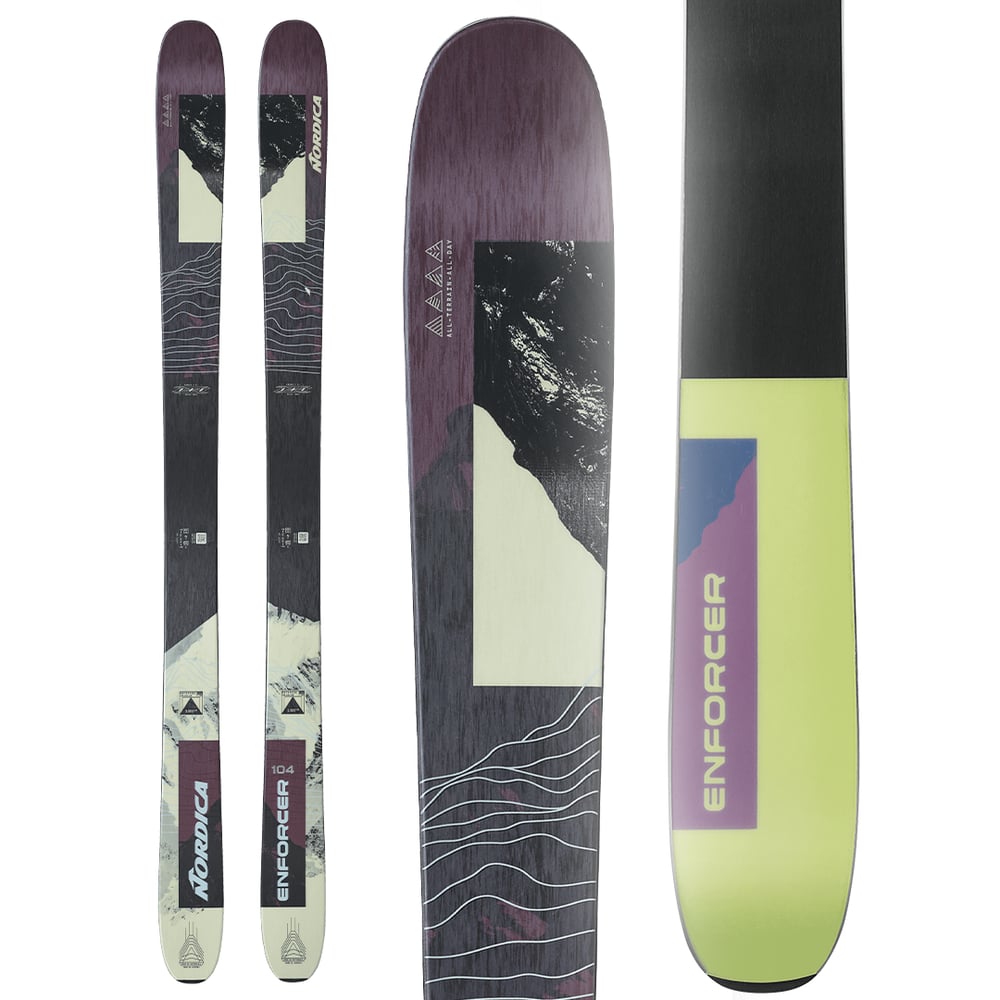
Ski waist width is the measurement across the narrowest part of the ski, usually shown in millimeters.
Waist width affects how quickly a ski moves from edge to edge, how it performs on firm snow, and how much surface area it provides in softer snow.
There is no single ideal width for every skier. The right width depends largely on the terrain and snow conditions you ski most often.
How to Find Your Ski Size
Ski Size Chart
Use this chart as a starting point for choosing ski length based on your height and ability level. Your weight, skiing style, terrain, ski shape, and personal preference can all affect the best length for you.
Swipe to see all sizes →
| Skier Height | Beginner | Intermediate | Advanced |
|---|---|---|---|
| 4'8" | 130–140 cm | 135–145 cm | 140–150 cm |
| 4'10" | 135–145 cm | 140–150 cm | 145–155 cm |
| 5'0" | 140–150 cm | 145–155 cm | 150–160 cm |
| 5'2" | 145–155 cm | 150–160 cm | 155–165 cm |
| 5'4" | 150–160 cm | 155–165 cm | 160–170 cm |
| 5'6" | 155–165 cm | 160–170 cm | 165–175 cm |
| 5'8" | 160–170 cm | 165–175 cm | 170–180 cm |
| 5'10" | 165–175 cm | 170–180 cm | 175–185 cm |
| 6'0" | 170–180 cm | 175–185 cm | 180–190 cm |
| 6'2" | 175–185 cm | 180–190 cm | 185–195 cm |
| 6'4"+ | 180–190 cm | 185–195 cm | 190+ cm |

What Does Ski Flex Mean?
Ski flex describes how easily a ski bends under pressure.
Softer skis are generally easier to flex and tend to feel more forgiving, while stiffer skis provide more resistance, support, and stability.
Unlike ski boot flex, skis typically do not use a standardized numeric flex scale, so flex descriptions are often listed as soft, medium, or stiff.
How to Find Your Ski Size
There isn't one exact ski length that works for every skier of the same height. Use your height as a starting point, then adjust based on your ability, weight, terrain, and how you like to ski.
Should I Size My Skis Up or Down?
Consider sizing slightly shorter if you:
- ✓ Are a beginner or newer skier
- ✓ Prefer slower speeds and easier maneuverability
- ✓ Are lighter for your height
- ✓ Prefer quick, shorter turns
- ✓ Want a more forgiving feel
Consider sizing slightly longer if you:
- ✓ Are an experienced or aggressive skier
- ✓ Ski at higher speeds
- ✓ Are heavier or stronger for your height
- ✓ Prefer longer, more powerful turns
- ✓ Spend significant time in powder or open terrain
- ✓ Want additional stability
Ready to start your ski boot search?
Shop Ski Boots Today


FAQ section
What size skis do I need?
Start with your height and ability level, then adjust based on your weight, skiing style, terrain, and the specific ski you are considering. Beginners often prefer slightly shorter skis, while experienced or aggressive skiers may choose additional length for stability and support.
Should skis be taller than me?
They can be, depending on your ability, weight, skiing style, and the ski itself. Many beginners use skis below head height, while experienced skiers may choose skis around or above their height. Rockered skis can also feel shorter on snow than their measured length.
Should beginners use shorter skis?
Often, yes. A slightly shorter ski can feel easier to turn and maneuver, making it a common choice for beginners. The ski should still be appropriately sized for the skier's height and weight and should not be excessively short.
Does weight affect ski length?
Yes. Weight affects how the ski flexes and performs. A heavier skier may benefit from additional length or support, while a lighter skier may feel more comfortable on a slightly shorter or softer ski.
Does ability level affect ski size?
Yes. Beginners often benefit from easier-to-maneuver lengths, while advanced skiers may prefer additional length for stability, speed, and performance. Ability is only one factor, though, and should be considered alongside weight, terrain, and skiing style.
What ski width should I choose?
Choose ski width based largely on the terrain and snow conditions you ski most often. Narrower skis are generally quicker on groomed snow, all-mountain skis balance versatility across mixed conditions, and wider skis provide more surface area for deeper snow.
Are wider skis harder to turn?
They can require more effort to move from edge to edge on firm snow compared with narrower skis. However, ski shape, construction, rocker, and the skier's technique also affect how easily a ski turns.
Do skis come with bindings?
Some skis are sold with bindings and others are sold flat without bindings. Product listings should clearly state what is included. If bindings are included, compatibility and adjustment depend on the binding, ski boot, boot sole length, and binding condition.
Can I buy used skis?
Yes. Used skis can be an excellent way to build or upgrade your setup at a lower cost. Look at the condition of the bases, edges, topsheets, bindings, and overall structure, and make sure the skis are appropriately sized for you.
What ski flex should I choose?
Beginners and lighter skiers often prefer softer skis, while intermediate skiers frequently choose medium flex. Stiffer skis can provide additional support for stronger, heavier, faster, or more aggressive skiers. Flex should match the skier rather than simply being as stiff as possible.