


SNOWBOARD BOOT SIZE & FIT GUIDE
The right snowboard boots should keep your feet secure and comfortable while giving you the support and response you need to control your board. Size matters, but so do fit, flex, riding style, and personal preference. This guide explains snowboard boot sizing, how snowboard boots should fit, what flex means, and what to consider when choosing the right pair for your feet, ability level, and riding style.

How Should Snowboard Boots Fit?
Snowboard boots should fit snugly around your entire foot without creating painful pressure points. Your toes should lightly touch or sit very close to the end of the boot when standing normally, but they shouldn't be painfully curled or compressed.
Your heel should remain securely held when you flex your knees and move into a riding position. Excessive heel lift can reduce control and response on the board.
New snowboard boots may initially feel tighter than expected. As the liner breaks in and conforms to your foot, the fit typically becomes more comfortable and slightly roomier.
If you are local to Colorado Springs and want to schedule a boot fitting you can call us at 719-357-8820.
How to Find Your Boot Size
Boot Size Chart
Swipe to see all sizes →
| Mondo (cm) |
US Men's | US Women's | US Kids / Youth |
|---|---|---|---|
| 15.0 | — | — | 8 Kids |
| 15.5 | — | — | 8 Kids |
| 16.0 | — | — | 9 Kids |
| 16.5 | — | — | 9 Kids |
| 17.0 | — | — | 10 Kids |
| 17.5 | — | — | 11 Kids |
| 18.5 | — | — | 12 Kids |
| 19.5 | — | — | 13 Kids |
| 20.0 | — | — | 13.5 Kids |
| 20.5 | 1 | — | 1 Youth |
| 21.0 | 2 | — | 2 Youth |
| 21.5 | 3 | 4.5 | 3 Youth |
| 22.0 | 4 | 5 | 4 Youth |
| 22.5 | 4.5 | 5.5 | — |
| 23.0 | 5 | 6 | — |
| 23.5 | 5.5 | 6.5 | — |
| 24.0 | 6 | 7 | — |
| 24.5 | 6.5 | 7.5 | — |
| 25.0 | 7 | 8 | — |
| 25.5 | 7.5 | 8.5 | — |
| 26.0 | 8 | 9 | — |
| 26.5 | 8.5 | 9.5 | — |
| 27.0 | 9 | 10 | — |
| 27.5 | 9.5 | 10.5 | — |
| 28.0 | 10 | 11 | — |
| 28.5 | 10.5 | 11.5 | — |
| 29.0 | 11 | 12 | — |
| 29.5 | 11.5 | 12.5 | — |
| 30.0 | 12 | 13 | — |
| 30.5 | 12.5 | 13.5 | — |
| 31.0 | 13 | 14 | — |
| 31.5 | 13.5 | 14.5 | — |
| 32.0 | 14 | 15 | — |
What Does Boot Flex Mean?
Boot flex describes how easily or firmly a boot flexes as you move into an active skiing or riding position. Softer boots generally require less force to flex and tend to feel more forgiving, while stiffer boots provide greater resistance and can feel more supportive and responsive.
There is no single flex that is right for everyone. Your ability level matters, but so do your weight, strength, riding style, terrain, speed, and personal preference.
Flex ratings also aren't perfectly standardized between manufacturers, so a particular rating from one brand may not feel exactly the same as the same rating from another.
SIGNS OF A GOOD FIT
- ✓ Snug
- ✓ Secure
- ✓ Heel Held
- ✓ No Painful Pressure
COMMON FITTING MISTAKES
- ✕ Buying too big
- ✕ Using shoe size only
- ✕ Ignoring heel movement
- ✕ Choosing flex by ability alone
How to Choose Your Flex
There isn't one perfect ski boot flex for every skier. Your ability level is a useful starting point, but your body weight, skiing style, strength, and personal preference all affect how a boot will feel and perform.
Consider these factors when narrowing down your flex
Ready to start your snowboard boot search?
Shop Snowboard Boots Today
Adult Snowboard Boots
New Adult Snowboard Boots
Used Adult Snowboard Boots
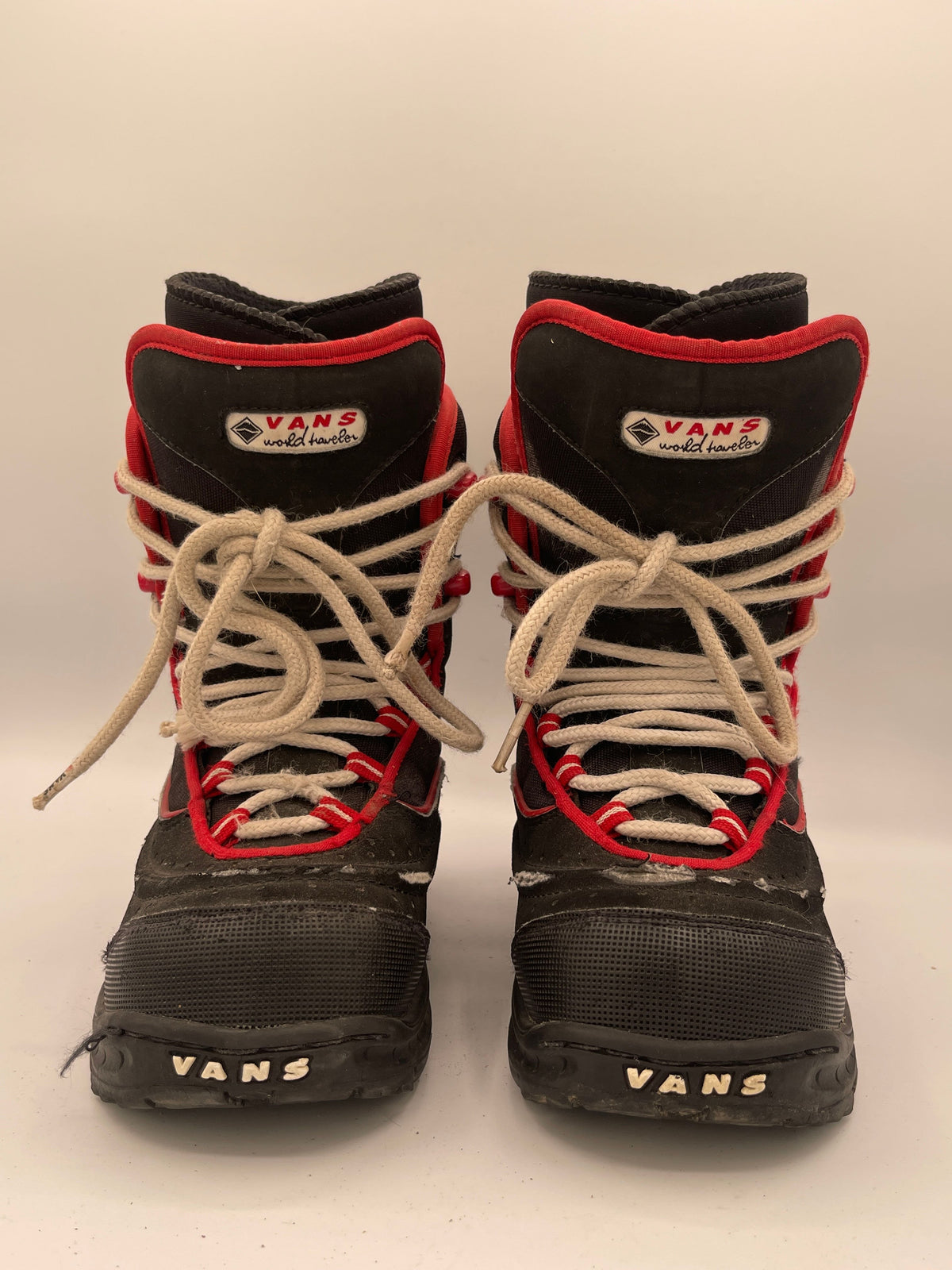
Used Kids Snowboard Boots
FAQ section
Should snowboard boots be tight?
Snowboard boots should fit snugly and securely without creating painful pressure points. Your heel should stay firmly held when you flex your knees, and your foot shouldn't slide around inside the boot. New snowboard boots often feel quite snug because the liner will compress and conform to your foot as it breaks in.
Should my toes touch the end of my snowboard boots?
Your toes should lightly touch or sit very close to the end of the boot when standing normally. When you bend your knees into a riding position, your heel should settle back and the pressure on your toes should decrease. Your toes shouldn't be painfully curled, crushed, or numb.
Should I size snowboard boots up or down?
Start with your measured foot size and the manufacturer's size chart rather than automatically sizing up or down. Snowboard boot sizing can vary between brands and models, and many people wear everyday shoes larger than their actual measured foot size. Focus on a snug, secure fit with minimal heel movement instead of choosing based only on the number on your street shoes.
What snowboard boot flex should a beginner use?
Beginners often prefer a softer or medium-soft snowboard boot because it is more forgiving and generally easier to flex. On a typical 1–10 flex scale, this often means approximately 1–4. Flex scales vary between manufacturers, though, and the rider's weight, strength, riding style, and preference should also be considered.
Should snowboard boots be the same size as my shoes?
Not necessarily. Your everyday shoe size can provide a starting point, but it shouldn't be the only measurement used to choose snowboard boots. Many people wear street shoes with extra room, while snowboard boots need a much more secure fit. Measure your feet and check the manufacturer's sizing information, then judge the final size by how the boot actually fits your foot.
Do snowboard boots get looser after breaking in?
Yes. Snowboard boot liners typically compress and conform to your feet with use, creating some additional room. A boot that feels perfectly roomy when brand new may become too loose after breaking in, so new snowboard boots should generally start with a snug fit.
Does weight affect snowboard boot flex?
Yes. A rider's weight and strength affect how a snowboard boot flexes under them. A heavier or stronger rider may find a particular boot softer and easier to flex than a lighter rider does. Weight should therefore be considered alongside ability level and riding style when choosing boot flex.
Is a stiffer snowboard boot better?
Not necessarily. Stiffer snowboard boots can provide additional support and quicker response, which some aggressive, freeride, or advanced riders prefer. Softer boots can provide greater freedom of movement and a more forgiving feel. Neither is inherently better; the right flex depends on the rider and how they want their setup to feel.